Fusion
The same mind that took pictures apart with electrons spent his final years trying to push atoms together. The result was the fusor, a fusion machine so simple that hobbyists still build their own.
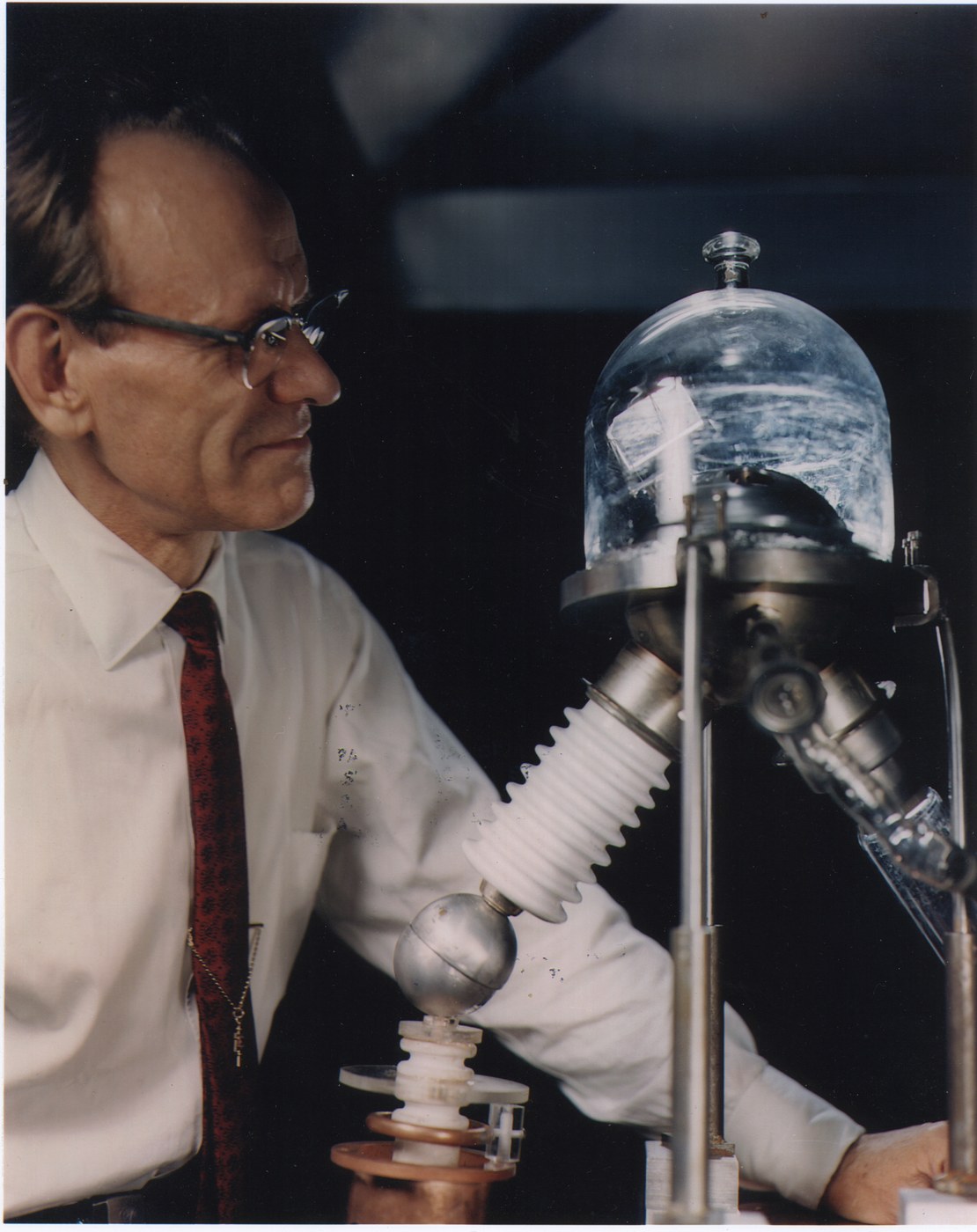
A glow in the multipactor
In the mid-1930s Farnsworth was building the multipactor, a tube that multiplied electrons by bouncing them between surfaces. In 1936 he noticed something odd in one of them: electrons gathering into a tight, glowing focus at the center of the tube, held there in empty space by electric fields alone. Pem recorded it in Distant Vision as an observation that stayed in his mind for decades.
If electric fields alone could focus particles into a point that tightly, he reasoned, the same trick might squeeze atomic nuclei together hard enough to fuse them, the reaction that powers the sun. It would need no giant magnets and no superheated plasma held in a ring.
In early 1947, through a mutual friend, Farnsworth spent about an hour on the phone with Albert Einstein discussing fusion. By family accounts Einstein encouraged him to pursue it for peaceful purposes and asked to see the mathematics when it was done.
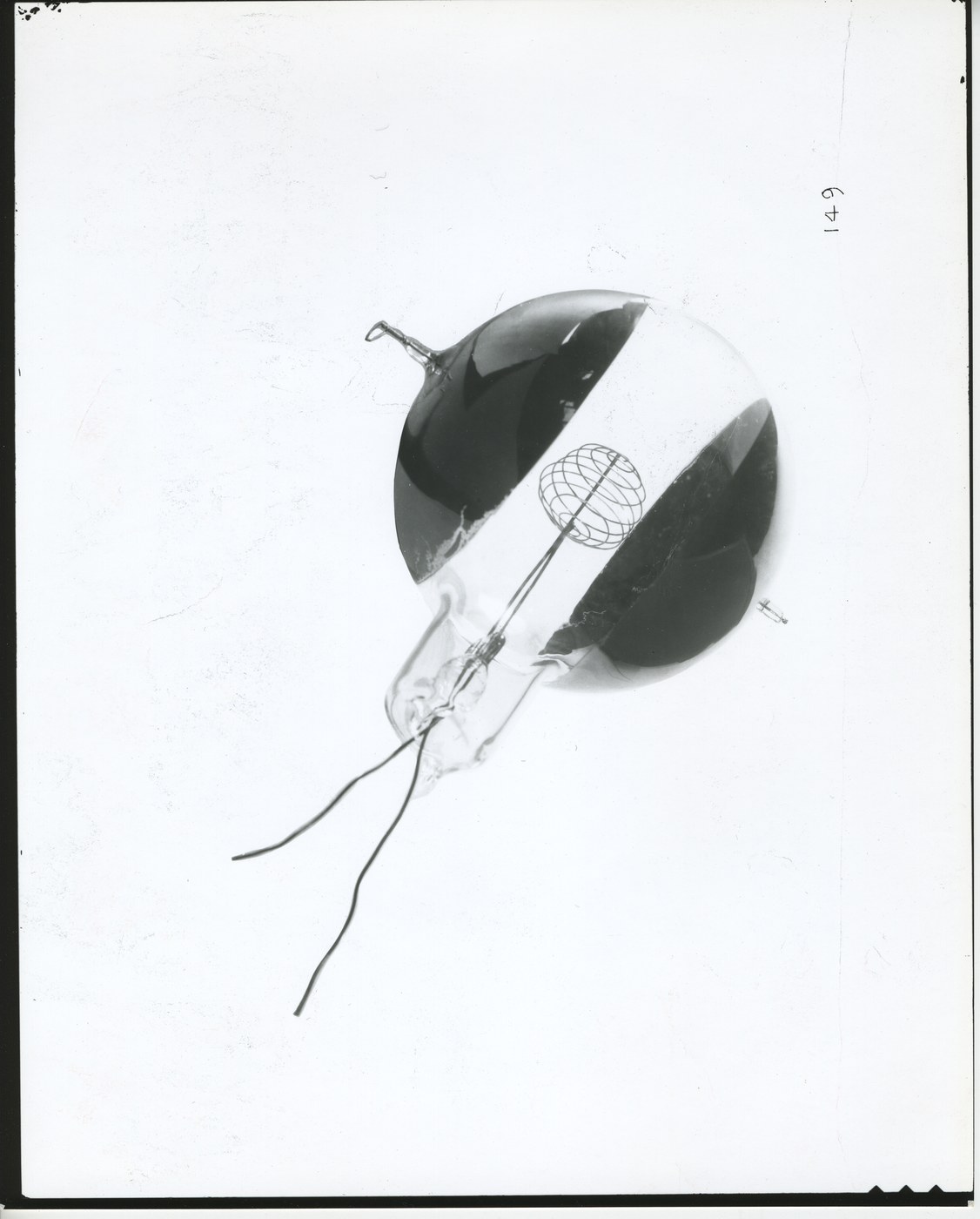
The fusor
In 1957, working privately in a basement, Farnsworth built his first fusion prototype. The idea was inertial electrostatic confinement: fire charged particles inward toward the center of a sphere, let the electric field hold them there, and let them collide until some of them fuse. When fusion happens, the machine gives off neutrons that can be counted.
ITT agreed to back the work at its Fort Wayne laboratory, and Farnsworth filed the first patent applications abroad in 1959 and 1960. His U.S. application, filed January 11, 1962, issued on June 28, 1966 as Patent 3,258,402, Electric discharge device for producing interactions between nuclei.
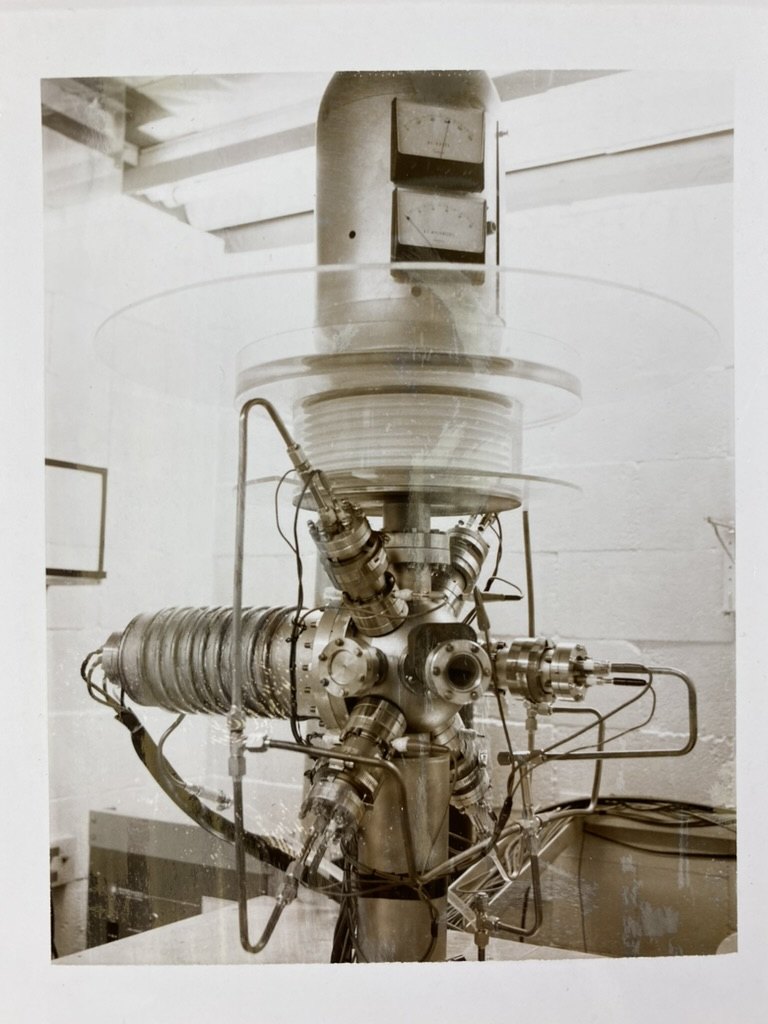
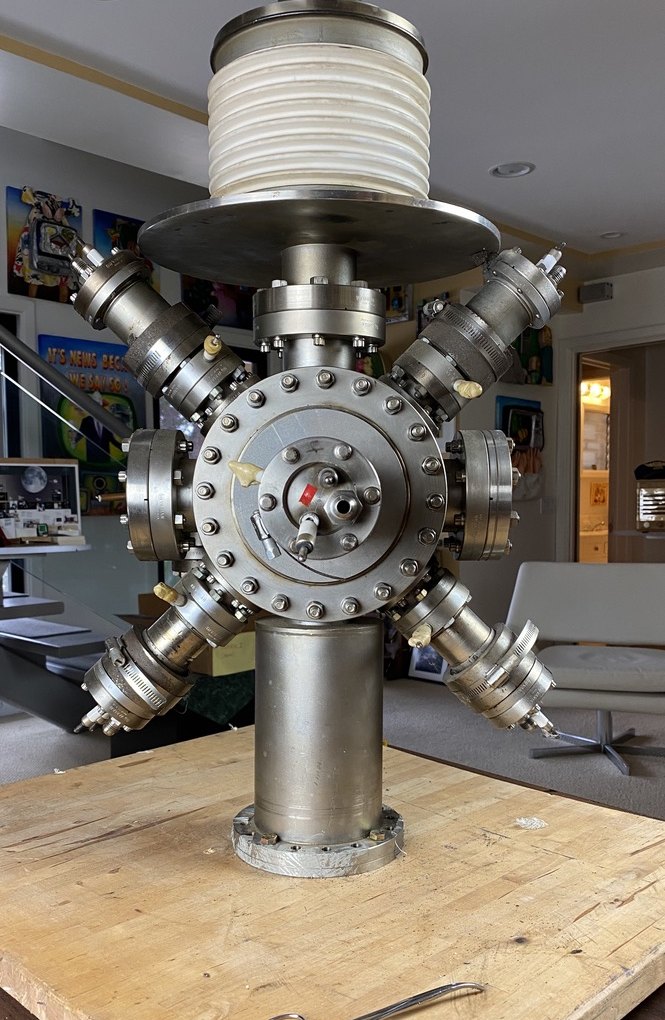
A small team built a series of fusors, first in glass bell jars and then in steel chambers. Gene Meeks designed ion guns that fired fuel into the center of the device. Robert Hirsch, a young physicist, joined in 1964 and pushed for deuterium-tritium fuel and a simpler gridded design. By the mid-1960s the Fort Wayne fusors were producing measurable neutron output, and in 1967 a portable fusor was demonstrated to Atomic Energy Commission fusion researchers in Washington.
Farnsworth’s second fusion patent, 3,386,883, Method and apparatus for producing nuclear-fusion reactions, was filed in May 1966 and issued in June 1968.
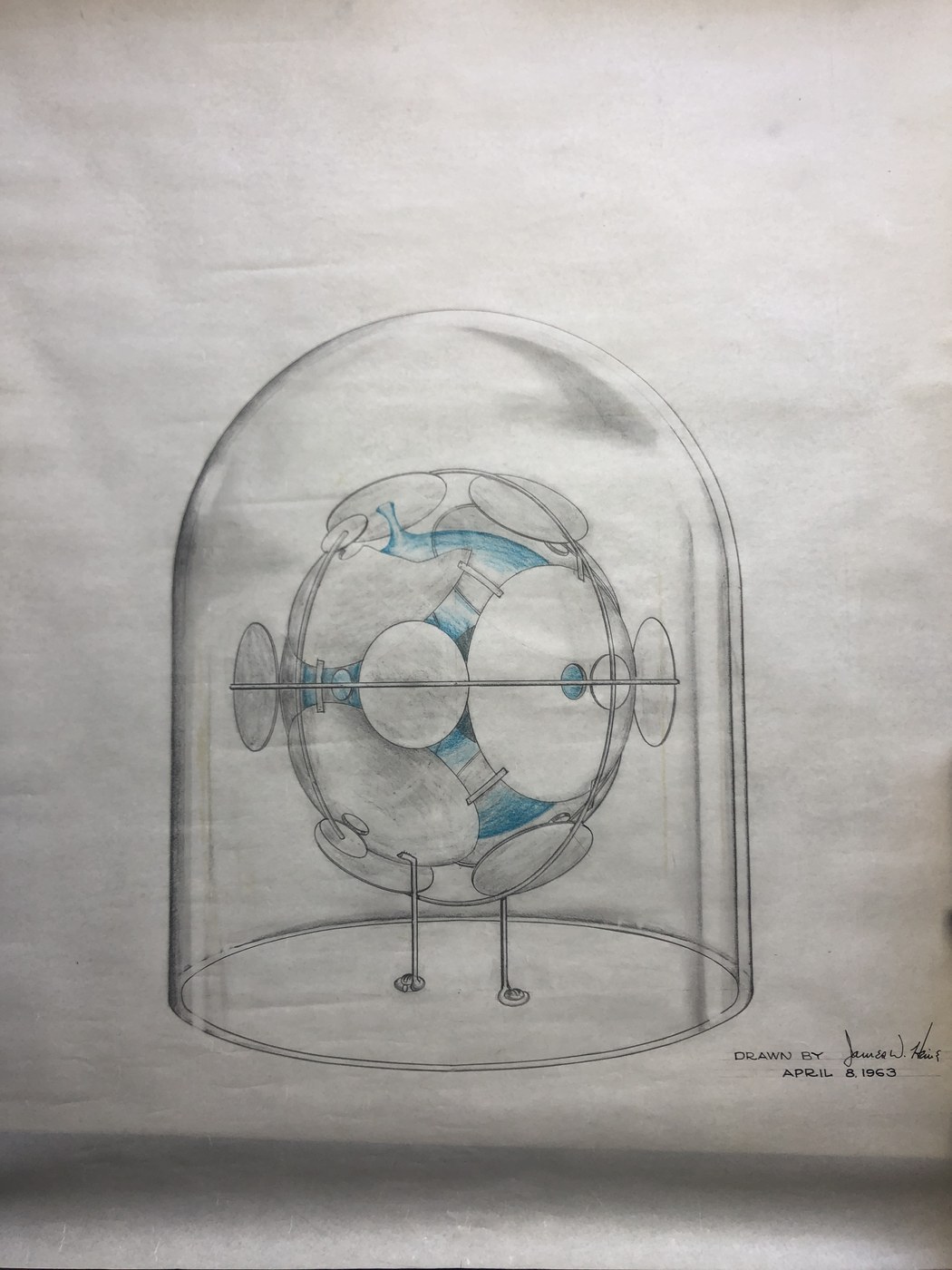
Fusor technical illustration
Drawn inside the ITT program by James W. Heine, in pencil and blue colored pencil on drafting paper. It shows the spherical electrode cage inside its bell jar, with the plasma in blue at the center.
It is one of thousands of pages of drawings and technical records from the Fort Wayne program held in the estate archive, along with the fusors themselves.
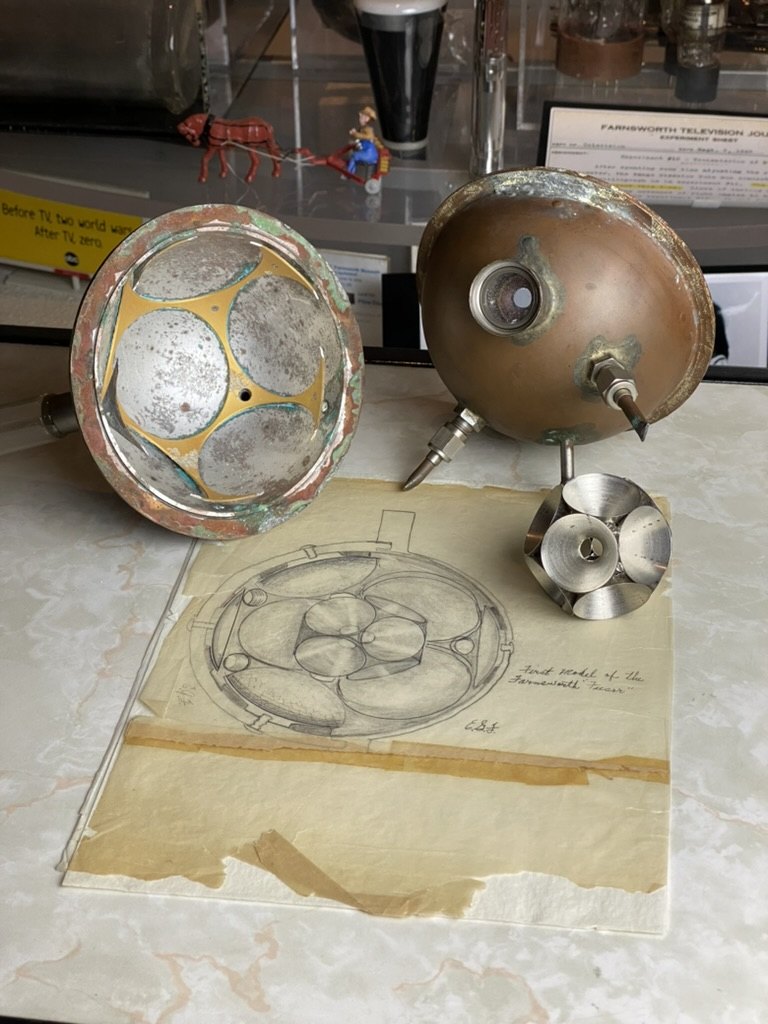
Utah
ITT ended the fusion program in 1967, and Farnsworth left the company. He went home to Utah, where Brigham Young University gave him laboratory space and Gene Meeks followed to keep the fusor running. In 1968 he formed Philo T. Farnsworth Associates in Salt Lake City with a handful of loyal colleagues. The company landed a contract with NASA, and records of it are in the estate archive, but it could not raise enough money to keep going. By 1970 the work had stopped.
Farnsworth died of pneumonia in Salt Lake City on March 11, 1971. He was 64.
What came after
No fusor has produced more energy than it consumes, and in its basic form it is not expected to. Most of the particles it accelerates hit the inner grid before they can fuse. But it does fuse atoms, reliably, in a machine small enough for a lab bench.
That made the fusor the starting point for decades of further work. University groups revived inertial electrostatic confinement research in the 1990s, and fusors are now used as compact neutron sources. In 1998 Richard Hull and Paul Schatzkin started fusor.net, where amateur builders around the world have since achieved fusion in home workshops with machines descended from Farnsworth’s.
Farnsworth kept a plaque on his desk that read: “Men and trees die. Ideas live on for the ages.”